Location

Uncategorized

How to Use a Ramp with Your Storage Container Like a Pro

If you’re renting a shipping container and plan to load it with tools, inventory, or rolling equipment, there’s one accessory that can completely change your setup: a ramp. But before you choose one, it’s important to understand how to use a ramp with a storage container safely and effectively. That’s exactly why we created our latest Container 101 video—to walk you through everything from ramp types and setup tips to real-world examples from actual job sites. Container 101: How to Use a Ramp with a Storage Container In this short video, you’ll get a real-world look at: What types of ramps are available The benefits of using a ramp: preventing injuries, quicker movement in and out of the container, ability to bring large items inside with ease How to install a ramp 👉 Whether you’re using a 20′ or 40′ container, this is the must-see guide to safer, smarter loading. Why It’s Worth Learning How to Use a Ramp with a Storage Container Many first-time users don’t realize just how much easier—and safer—things get when they understand how to use a ramp with a storage container properly. Here’s what happens when you skip the ramp: Lifting heavy gear becomes risky Crews waste time moving items awkwardly Containers get disorganized fast But when you’ve got the right ramp in place—and you know how to use it—your workflow gets smoother, faster, and safer. Ramps Help You Stay Organized, Too You can’t have a smooth system if everything piles up at the entrance. When you know how to use a ramp with a storage container, you unlock the full storage potential inside. A ramp lets you: Create clear pathways for stacking and unloading Position shelving units more effectively Keep frequently used items at the front Avoid floor clutter and bottlenecks Need more help setting up your layout? Check out our partner Eagle Leasing’s article: How to Organize a Storage Container Like a Pro What Ramp Is Right for You? In our video, we break it down. But here’s a snapshot: Ramp Type Best For Pros & Considerations Dolly Ramp Moving, quick jobs Very stable, and easy transport Heavy-Duty Ramps Long-term jobs, heavier items A bit heavier, 2 per set, can hold up to 8,000lbs Knowing how to use a ramp with a storage container also means choosing the right type. If you’re unsure? Ask us—we’ll help you decide based on your container size, job type, and terrain. Final Thoughts Understanding how to use a ramp with a storage container doesn’t just help you load faster—it makes your entire container setup safer, more efficient, and easier to organize. Before your next delivery, take a few minutes to watch our Container 101 video. It could save your team hours over the course of the project. 📦 Need help picking the right ramp or accessory? We’re here to help. Just reach out to the team at Rent-A-Container, we’re available to assist you on your project all throughout our network.

Read More »
Uncategorized

Jobsite Prep for Container Rental: How to Get Ready for Delivery

When you order a shipping container—whether for temporary storage, a mobile office, or a special event—the last thing you want is a delayed or failed delivery. That’s why jobsite prep for container rental is so important. A few simple steps can make all the difference between a smooth drop-off and a stressful situation. 1. Clear Access: First Step in Jobsite Prep for Container Rental The delivery truck isn’t small—it needs space to back up, tilt the bed, and safely lower your container. Most trucks need about 12 feet of width and at least 14 feet of overhead clearance. That means watching out for low-hanging power lines, tree branches, signs, or anything else that could get in the way. Even if the area looks open, we recommend walking the delivery path and imagining a full-sized truck making the turns. 2. Choose a Solid, Level Surface for Smooth Container Placement Your container needs to rest on ground that won’t shift or sink. Gravel, concrete, compacted dirt, or pavement are all great. Avoid placing it on soft grass, loose soil, or an area prone to standing water. Why? Over time, uneven surfaces can cause the container to settle and shift—making the doors difficult to open or close. If your site is slightly off-level, we can usually shim it, but it’s better to plan for stability. 3. Plan Door Clearance During Container Delivery Prep It might sound obvious, but once that container is placed, you’ll need space to open the doors—and use them. We recommend leaving at least 4 feet of clearance in front of the container doors. If you plan to access the container frequently, make sure it’s placed in a spot that’s not just out of the way—but also convenient to get to. 4. Drainage & Weather-Proofing for Long-Term Container Rentals Rain, snow, and ice are part of life in the East Coast and Midwest. If you’re placing the container for long-term use or during the colder months, think about drainage. If the area gets muddy or floods easily, consider raising the container off the ground using railroad ties, concrete blocks, or heavy-duty pads. This helps prevent moisture from getting trapped underneath and extends the life of the unit. 5. Talk to Your Delivery Team About Jobsite Requirements The best deliveries are the ones where everyone’s on the same page. When you place your order, let us know about any site quirks—tight turns, gates, steep inclines, or specific delivery times. Our team has delivered to hundreds of locations across the East Coast and Midwest, from tight city alleyways to wide-open job sites. We’re always happy to answer questions, review maps, or even hop on a call to walk through your site plan. No surprises = no delays. Final Thoughts on Prepping Your Site for Container Delivery Prepping your site is one of the easiest ways to ensure your container shows up on time and gets placed exactly where you want it. And if you’re not sure where to start, don’t stress—we’re here to walk you through the jobsite prep for container rental step by step. Want to see how tight-site deliveries get done? Check out Eagle Leasing’s post on how they deliver containers to challenging job sites. (Yep, that’s our sister company—we’re all in this together.)

Read More »
News

Standard vs. High-Cube Container: What’s the Difference?

Standard vs High-Cube Container – Key Differences at a Glance When you’re renting a shipping container, size matters—but it’s not just about length. Height plays a huge role in how you use the space inside, and that’s where the standard vs high-cube container decision comes in. You might’ve seen “high-cube” listed next to 20’ or 40’ containers and wondered what the real difference is. Simply put: standard containers are 8’6” tall, while high-cubes are 9’6”—giving you an extra foot of vertical space for storage, mobility, and custom setups. We’ve got you covered—here’s a clear breakdown to help you choose the right fit for your project. What’s the Actual Size Difference? Let’s start with the numbers: Standard Container Height: ~8’6” tall (exterior) High-Cube Container Height: ~9’6” tall (exterior) So, you’re getting about one extra foot of vertical space with a high-cube. Doesn’t sound like much? It can make a big difference. Why the Extra Height in a High-Cube Container Matters That extra foot can mean the difference between: Stacking two pallets vs. three Standing up tall shelving vs. laying it down Comfortably walking inside your mobile workspace vs. ducking your head If you plan to maximize vertical space, store oversized equipment, or even convert a container into an office or workspace, the high-cube option is often the smarter choice. When to Choose a Standard Container Go with a standard 8’6” unit if: You’re storing small to medium items like tools, boxes, seasonal inventory The container will be used short-term and doesn’t require interior walk-through space You’re dealing with low clearance areas (under power lines, trees, tight alleyways) Budget is tight and you don’t need the extra foot Pro Tip: Standard containers are slightly more affordable to rent and deliver—especially in tight urban areas. When to Choose a High-Cube Container High-cube containers are ideal for: Tall equipment (like racking systems, industrial gear, or oversized furniture) Jobsites where you’ll frequently walk in/out of the unit Conversions into mobile offices, pop-ups, or workshops Customers who want more cubic footage without upgrading to a longer container They’re especially helpful when floor space is limited but you still need storage volume. A Real Example from Our Customers: We had a customer in Philadelphia converting a 20’ container into a mobile bike repair station. The standard height made it hard for techs to stand comfortably inside. Swapping to a 20’ high-cube gave them extra headroom and space to install wall-mounted tools—problem solved. What About Availability? Both standard and high-cube containers are available in 20’ and 40’ sizes, but high-cubes are slightly less common and may require extra scheduling notice in certain regions. Not sure what’s available near you? Contact us and we’ll walk you through local stock and options. Final Thoughts The difference between a standard and high-cube container might seem small, but it can make a big impact—on space, comfort, efficiency, and budget. If you’re still unsure, start by figuring out what’s going inside, how often you’ll access it, and where it’s going to sit. 👉 Need help choosing a size overall—not just the height?Check out our partner Eagle Leasing’s excellent breakdown:Container Rental Guide: What Size Is Right? Or just give us a call. We’ll give you the honest answer—no up-sell, no pressure.

Read More »
News

Top Construction Container Rental Mistakes and How to Avoid Them

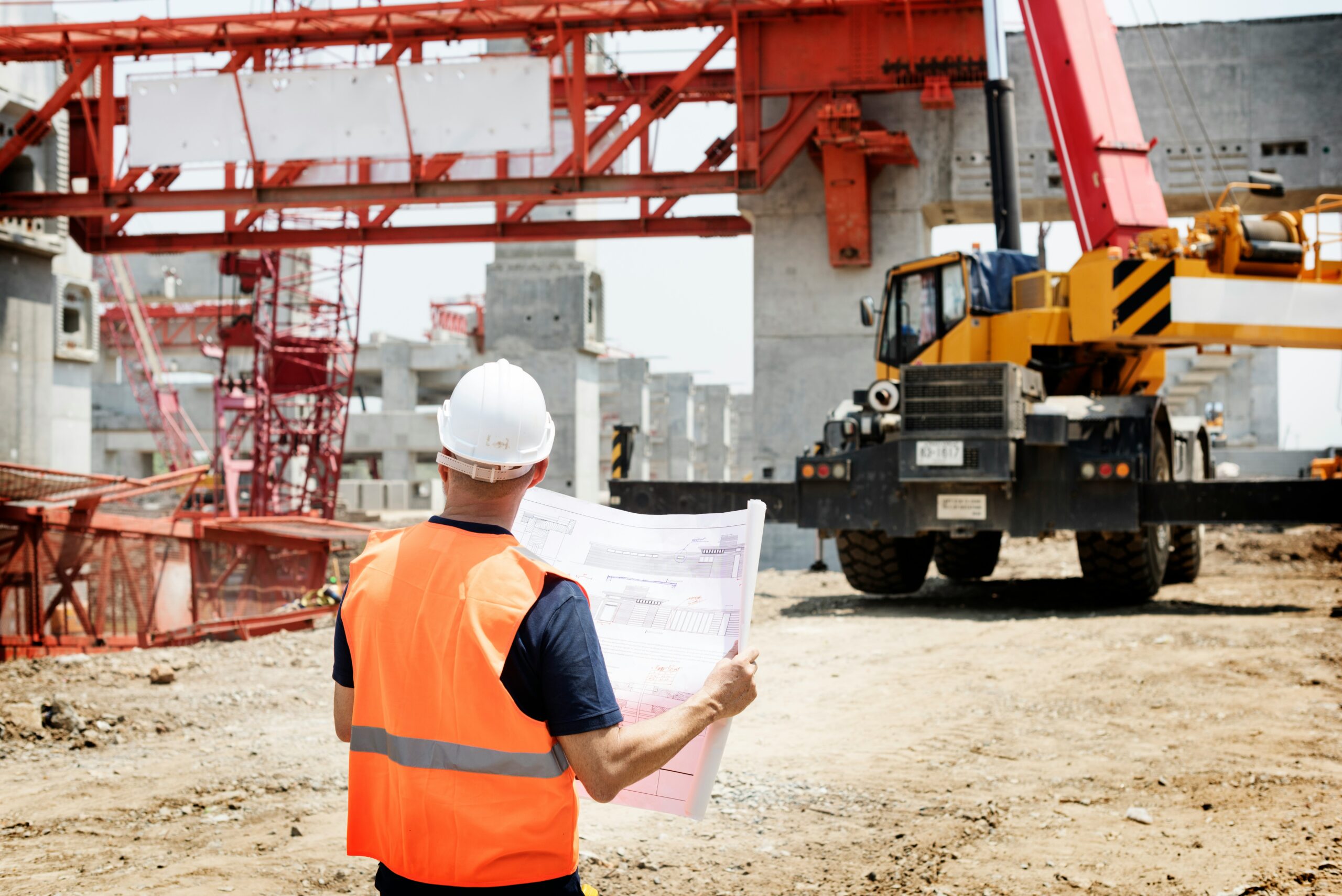
Shipping containers are a staple on construction sites, but construction container rental mistakes—like choosing the wrong size, ignoring site prep, or mishandling access—can lead to costly delays, safety hazards, or frustrated crews. Whether you’re managing a jobsite or overseeing a large-scale renovation, avoiding these five common mistakes will keep your project running on time and under budget. ❌ 1. Not Measuring Your Jobsite for Container Delivery Why it’s a problem: Many construction teams underestimate the space and clearance needed for delivery trucks and container placement—especially on tight urban sites or rugged terrain. What to do instead: Measure the delivery path and staging area—remember, a 40ft container needs around 100 feet of straight clearance. Look out for common site hazards: loose gravel, unstable slopes, scaffolding, overhanging power lines, etc. Confirm whether access is drive-in or crane-lift, depending on site conditions. ❌ 2. Choosing the Wrong Container for Your Construction Site Why it’s a problem: Choosing a container that’s too small leaves your team disorganized, with tools and supplies left unsecured. Oversizing adds unnecessary rental costs. What to do instead: Take inventory of what needs to be stored: job boxes, scaffolding, power tools, PPE, compressors, etc. For most construction sites: A 20ft container is ideal for tools, ladders, and basic supplies. A 40ft container is better for bulky items, staging long-term materials, or sharing across crews. Pro Tip: If your crew expands mid-project, it’s easier to add a second container than repack a single overloaded one. Trouble deciding what size to choose? Click here ❌ 3. Not Preparing the Site for Heavy Equipment Why it’s a problem: Containers placed on uneven, muddy, or sloped ground can shift, sink, or block access—a major safety risk on active jobsites. What to do instead: Prepare a level, compacted surface: gravel pads, concrete, or steel plates work well. Avoid placing containers too close to excavation zones or moving machinery paths. Elevate containers slightly to avoid water pooling or frozen door seals in cold months. Pro Tip: Use 4x4s, concrete blocks, or crane mats to improve ventilation and accessibility beneath the container. ❌ 4. Poor Planning for Daily Access Needs Why it’s a problem: Crews waste valuable time when frequently used items are buried in the back of the container—or worse, multiple teams are waiting for the same single access point. What to do instead: Zone the container interior: fast-access items like PPE and hand tools should be near the door; bulk storage or infrequent items in back. Label shelves and boxes to minimize dig-through time. Consider double-door or side-access containers if multiple crews will access it simultaneously. Pro Tip: On larger sites, dedicate one container for tools and another for materials to streamline crew access. ❌ 5. Overlooking Permits or Local Placement Rules Why it’s a problem: Even on commercial jobsites, local zoning laws or building codes may restrict container placement or duration—especially in city projects or government contracts. What to do instead: Check city codes, general contractor guidelines, or client requirements. Get written approval before staging containers on sidewalks, easements, or shared property lines. Ask your vendor if they can provide support documents for permit applications. Pro Tip: Some municipalities require permits only for longer than 30-day rentals—know the threshold ahead of time. ✅ Bonus: Choose a Container Partner That Understands Construction Working with a container provider who understands construction container rental mistakes can save you time, money, and jobsite stress. At Rent-A-Container, we’ve supported: Commercial builders Infrastructure contractors Demolition teams Event crews and remodelers We’ll recommend the right container setup, deliver on your schedule, and help your team avoid costly mistakes. 📞 Get Jobsite-Ready Storage With No Guesswork From site prep to right-size planning, we’ve got your back.👉 Contact Rent-A-Container today for a quote and expert guidance.

Read More »
Uncategorized

What Fits in a 20ft and 40ft Shipping Container: Real Examples and Size Guide

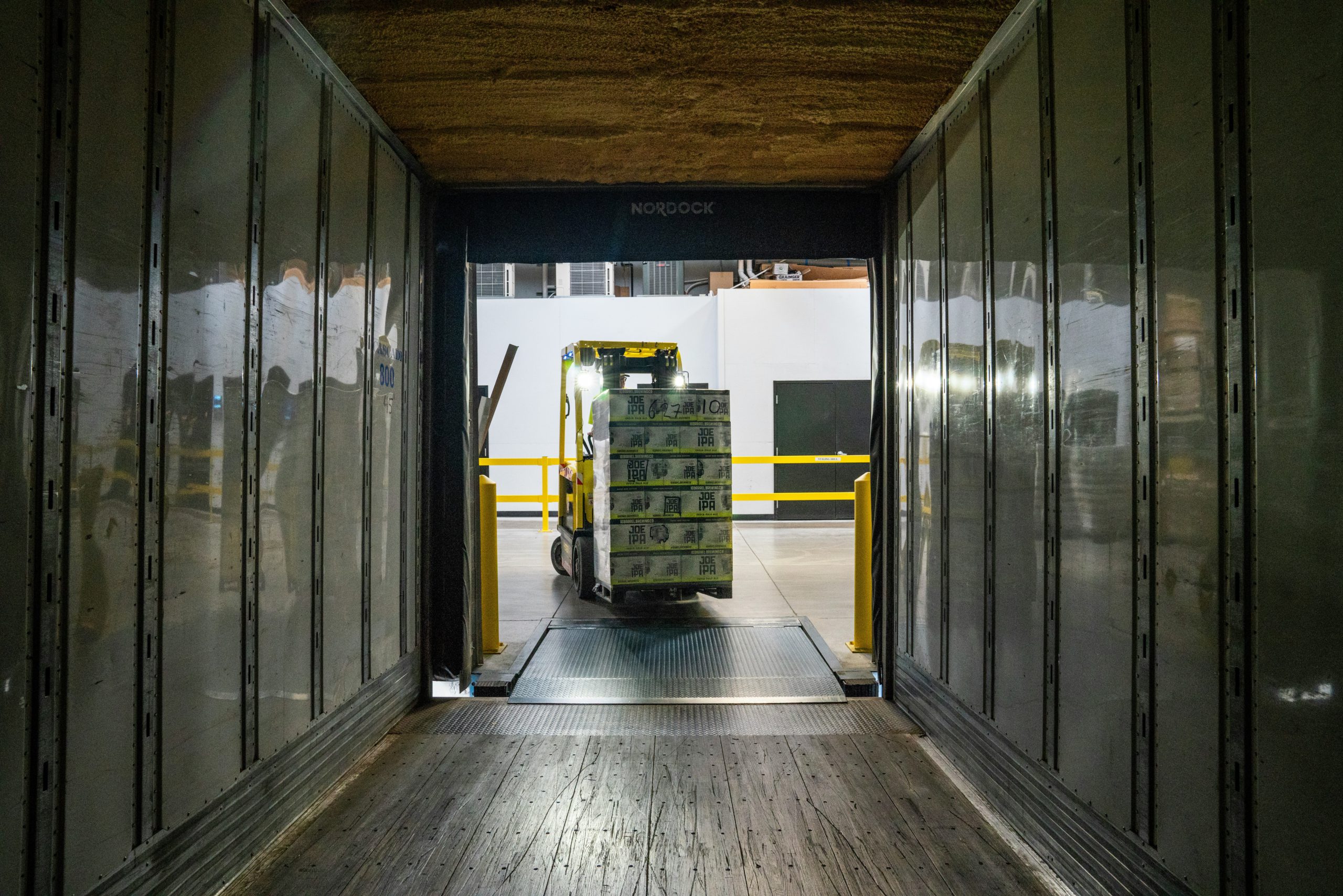
Choosing the right container size is one of the most important steps when planning a project, move, or storage solution. At Rent-A-Container, our most popular options are the 20ft and 40ft shipping containers — offering secure, weatherproof storage for everything from construction gear to full home contents. If you’re wondering what fits in a 20ft and 40ft shipping container, this guide breaks it down with detailed, real-world examples to help you plan confidently and avoid over- or under-ordering Quick Size Comparison: 20ft vs 40ft Shipping Containers Size Dimensions (L x W x H) Approx. Volume Ground Space 20ft 20’ x 8’ x 8.5’ ~1,170 cubic ft 160 sq ft 40ft 40’ x 8’ x 8.5’ ~2,390 cubic ft 320 sq ft What Fits in a 20ft Shipping Container? Real-World Storage Examples A 20ft container offers about the same space as a single-car garage and is ideal for extra residential space, jobsite storage, or business inventory overflow. Residential Storage: What You Can Fit in a 20ft Container 1 full living room set (sofa, loveseat, coffee table, TV stand) 2 queen beds with frames 1 dining table + 6 chairs 1 washer and dryer 2 dressers + 2 nightstands 1 desk + office chair ~100 medium-sized boxes or totes (18” x 18” x 16”) Construction Site Examples 1 large generator or compressor 2 wheelbarrows 2 full scaffolding towers (disassembled) 10+ shovels, rakes, and manual tools 8-10 rolling job boxes or tool chests 1 pallet of bulk materials (tile, paint, etc.) Retail / Event Examples 4 folding tables + 40 chairs 10 stackable storage bins (27 gal) 6 rolling display racks Portable booth and tent components 12 boxes of branded materials or product samples What Fits in a 40ft Shipping Container? Storage Capacity Explained A 40ft container is twice the size of a 20ft, perfect for large commercial operations, full house moves, or long-term equipment storage. Residential Examples Contents of a 4–5 bedroom home 3 bedroom sets (beds + dressers + nightstands) 2 full couches + 2 armchairs 1 refrigerator + 1 deep freezer Dining table with 8–10 chairs Washer and dryer Office desk, chair, and bookcase ~200+ medium or large boxes Construction / Industrial Examples 2 cement mixers or compact machines 2–3 portable scaffold systems 1 small skid steer or forklift (low-profile) 2 pallets of rebar or pipe 2,000 bricks or 50 bags of cement 15–20 job boxes or gang boxes 10 traffic barriers + signage systems Retail / Event Examples 10 large garment racks 10 pallets of merchandise Full pop-up shop setup: walls, fixtures, lighting 1 point-of-sale booth or kiosk Event rigging, AV equipment, signage cases 60+ folding chairs + staging material Tips for Deciding What Fits in a 20ft and 40ft Shipping Container Still not sure what fits in a 20ft and 40ft shipping container? These quick tips will help you evaluate your space, access limitations, and storage goals before placing your order. Measure your largest items and stackability—tall or awkward shapes may limit usable space. Consider access: A 40ft container may not fit in residential areas or tight construction sites. Think about growth: If your needs are expanding, upsizing can save time and money later. Helpful Rules for Packing a 20ft or 40ft Container Efficiently 1 pallet (standard 48” x 40”) takes up ~13.5 sq ft of floor space—about 8–10 pallets fit in a 20ft, and 18–20 in a 40ft container. Stacking saves major space—especially with plastic bins, chairs, or boxed goods. Don’t forget access: Leave a small pathway inside if you’ll need to retrieve things while in use.   Still Not Sure What Size You Need? Let our team help! We’ll walk through your inventory or use case and match you with the perfect solution. 📞 Contact us today for a fast quote and personalized advice.

Read More »
News

Shipping Container Storage Tips for Homeowners

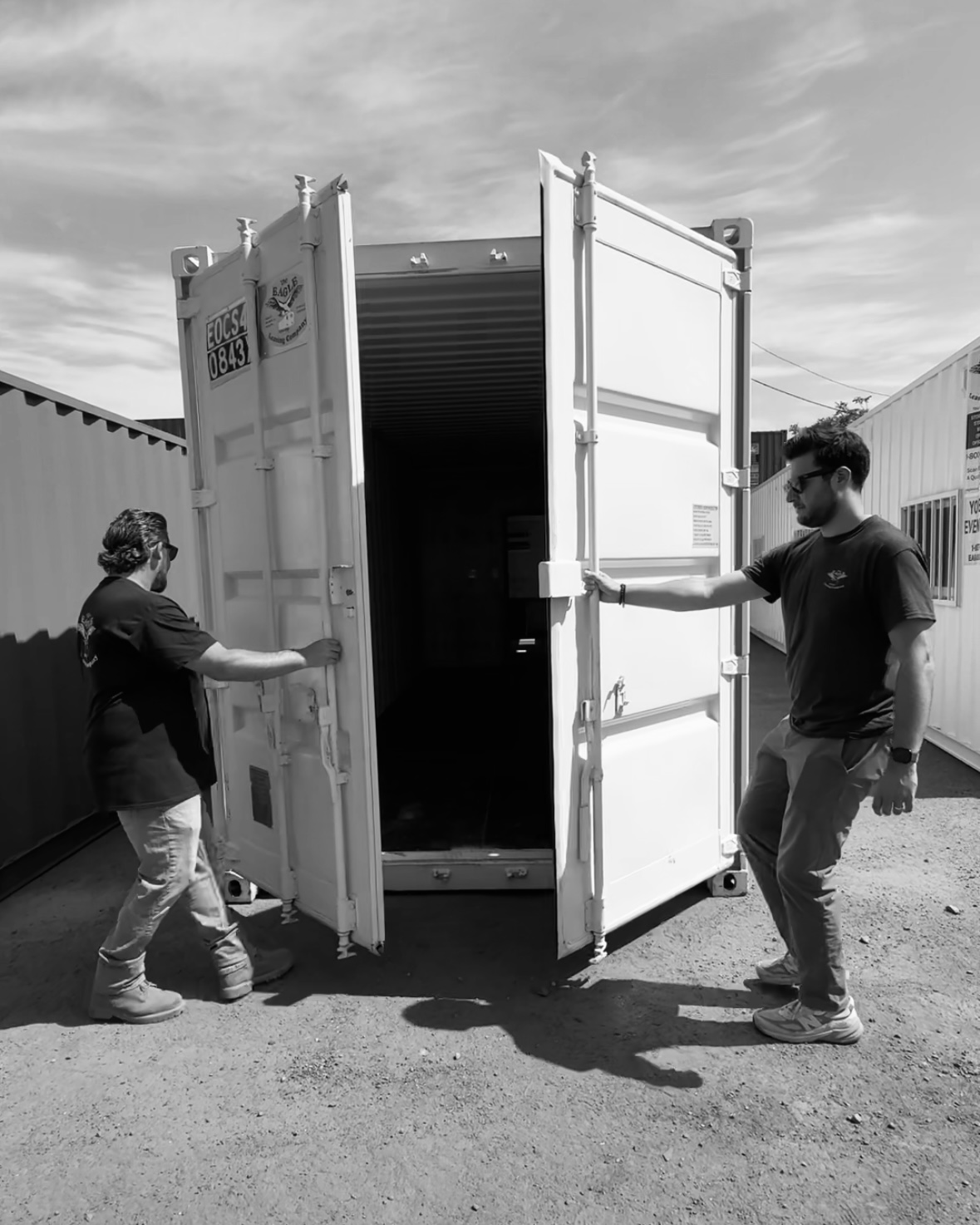
If you’ve ever considered using a shipping container for storage, you’re not alone. Many suburban homeowners are turning to shipping containers as a cost-effective and durable solution for extra storage space. Whether you’re storing furniture during a home renovation, keeping seasonal equipment safe, or just looking for a long-term storage solution, knowing how to properly load and unload your container is essential. Here are a few shipping container storage tips for homeowners and business owners alike! Preparing for the Shipping Container Process   Choosing the Right Location   Before you even think about loading your container, make sure you have the right spot for it. Find a Level Surface: A shipping container needs to sit on a stable and level surface to prevent shifting or tilting over time. Concrete, gravel, or a compacted dirt pad are good options. Consider Drainage: Avoid placing your container in a low-lying area where water could collect. A slightly elevated spot will help prevent moisture buildup inside. Check Local Regulations: Some suburban neighborhoods have restrictions on shipping containers. Before you bring one onto your property, check zoning laws and HOA guidelines. Gathering Necessary Equipment Loading and unloading heavy or bulky items requires the right tools. Here’s what you should have on hand (also offered by RAC) Dollies and Hand Trucks: Essential for moving large items like furniture and appliances. Ramps: If your container is elevated, a sturdy ramp will make loading and unloading much easier. Ratchet Straps and Tie-Downs: Keep your items from shifting inside the container. Protective Gear: Gloves, steel-toe boots, and back support belts can help prevent injuries. Loading Tips for Maximum Storage Efficiency Plan Your Layout Before You Start The key to an easy-to-access container is good organization. Think of your container as a puzzle—placing items in the right order will make a huge difference. Load Heavy Items First: Start with the largest and heaviest items, like furniture and appliances. Position them along the back and sides of the container to create a stable base. Stack Vertically but Safely: Use sturdy boxes and pallets to stack items up to maximize space. Be sure to leave space for air circulation. Keep Frequently Needed Items Near the Door: If you’ll need access to certain items before others, keep them towards the front of the container for easy retrieval. Use Shelving and Pallets: If you plan to store items long-term, adding shelves or using pallets to keep things off the ground can help prevent moisture damage. Securing Items to Prevent Shifting during and after loading A shipping container can experience temperature changes and slight movement due to ground settling, which can cause stacked items to shift. Secure your belongings properly using these shipping container storage tips when loading and unloading: Use Ratchet Straps: Tie down heavy items to prevent movement. Fill Empty Spaces: Use blankets, foam, or other padding to fill in gaps between items and minimize shifting. Wrap Fragile Items: Use bubble wrap, furniture pads, or blankets to protect delicate items. Unloading Tips to Ensure Safety Check for Any Shifted Items Before Opening If your container has been sitting for a while, there’s a chance that items may have shifted. Before opening the doors, tap on them gently to check for pressure buildup or anything pressing against them. Open the doors slowly to prevent anything from falling out unexpectedly. Unload in a Controlled Manner Remove Straps and Bracing First: Start by taking off any ratchet straps or tie-downs before moving large items. Work from Front to Back: Take out items in reverse order of how they were loaded, working from front to back to avoid creating unstable stacks. Use a Dolly or Hand Truck for Heavy Items: This will save your back and prevent potential injuries. Get Help if Needed: Some items may be too heavy to handle alone. Having a friend or family member assist can make the process smoother and safer. Special Tips for Long-Term Storage Weather-Proofing and Moisture Control If you’re planning to store items for an extended period, moisture and temperature fluctuations can be a concern. Here’s how to protect your belongings: Use Moisture Absorbers: Placing silica gel packs or moisture absorbers inside the container can help prevent mold and mildew. Ensure Proper Ventilation: Shipping containers can get hot in the summer and cold in the winter. Adding vents or using a dehumidifier can help regulate moisture levels. Cover Items with Tarps or Plastic Wrap: This adds an extra layer of protection against dust and moisture. Common Mistakes to Avoid Even with the best planning, there are a few pitfalls to watch out for: Overloading the Container: Keep weight evenly distributed and don’t exceed the container’s weight capacity. Ignoring Safety Gear: Always use gloves, proper footwear, and lifting techniques to prevent injury. Stacking Items Too High Without Support: Tall stacks can collapse, causing damage or injury. Use shelving or stabilizers. Forgetting to Label Boxes: Clearly mark boxes so you can find what you need quickly later on. Not Checking Local Regulations: If your neighborhood has restrictions on shipping containers, you don’t want to find out after it’s already delivered!   Conclusion Using a shipping container for storage can be a fantastic solution for suburban homeowners, offering ample space and security for your belongings. By following these shipping container storage tips, you can ensure your items stay safe, organized, and easily accessible when you need them. A little planning goes a long way—take the time to set up your container properly, and you’ll thank yourself later. Have you used a shipping container for storage before? I’d love to hear your experience and any additional tips you might have! Looking for the right container option? Click here to check out Rent-A-Container.

Read More »